

The right display depends on more than clear sheet and attractive tiers: you need enough usable space, safe food-facing surfaces, airflow, load support, and access for cleaning and replenishment. By the end, you will be able to measure your site, choose the appropriate format, compare materials, and prepare a purchase specification for an Ahmedabad fabricator.
Key takeaways
- Choose self-service, staff-service, or presentation-first format by customer flow.
- Measure counter depth, customer reach, doorways, lifts, and installation access before ordering.
- Use covered, cleanable displays with ventilation suited to your donut fillings and toppings.
- Specify acrylic thickness, shelf loads, joints, and food-contact-safe fittings in writing.
Choose the Display Format by Service Method and Donut Volume
Choose the format by service method first: self-service needs easy access and cleaning, staff service favours controlled reach, and visual merchandising prioritises presentation over speed. For an acrylic donut display counter in Ahmedabad, match that choice to peak volume and available floor space.
| Format | Best for | Main trade-off |
|---|---|---|
| Freestanding counter | High-volume staff service and broad assortments | Fast restocking, but consumes floor area |
| Countertop stand | Small assortments and quick replenishment | Saves space, but holds fewer donuts |
| Tiered stand | Visibility across several flavours | Uses less frontage, but upper rows need safe staff access |
| Wall unit | Visual merchandising or staff-controlled service | Preserves counter space, but limits customer access |
| Enclosed cabinet | Dust-sensitive products and controlled presentation | Protects donuts, but doors slow service and restocking |
Estimate capacity from usable shelf area, not the outside dimensions. Divide usable shelf width by the donut diameter plus clearance between items, then multiply by rows and levels. Leave enough room for fingers or tongs to remove one donut without touching its neighbours.
Keep filled, glazed, powdered, and oversized donuts on separate trays or levels when handling or mess differs. For self-service, request removable trays, rounded internal corners, and openings large enough to clean. An open stand speeds access; a sealed case improves dust control but can trap condensation around warm donuts and slow replenishment.
Use ventilation that limits dust without blowing directly across the products.
Measure the Counter, Customer Reach, and Installation Route Before Ordering
Give a bakery display counter supplier in Ahmedabad four site measurements before requesting a quotation: frontage, front-to-back depth, total height clearance, and the customer standing distance that keeps the queue clear. A counter that fits the countertop can still obstruct service.
1. Measure staff access behind or beside the unit. Record the space needed to lift out trays, open doors, change labels, and restock from cartons. Include the swing of every door and the clearance for hands, trays, and packaging.
2. Mark nearby heat, water, and power sources. Measure clearance from ovens, hot trays, sinks, wash areas, coffee machines, service equipment, and electrical points. Acrylic is not a heat barrier; keep hot trays and steam away from it. For internal LEDs, reserve room for low-heat lighting, wiring, ventilation, and replacement access.
Do not trap heat inside a small enclosure.
3. Measure the delivery route from the workshop or vehicle to the final position. Record doorway widths, staircase turns, lift width, depth, and height, plus the largest removable panel. A bonded case can fit the plan and still fail at the bakery entrance.
4. Put the finished envelope, door swing or lift-off-panel size, base-levelling method, maximum shelf load, and on-site assembly requirement in the purchase brief. These details expose installation problems before fabrication begins.
Balance Dust Protection, Freshness, Ventilation, and Food Hygiene
Choose an enclosed display when dust, coughing, or customer handling is the greater risk; choose an open stand when rapid service and frequent replenishment matter more. An enclosed cabinet protects presentation but adds cleaning points at doors, handles, tracks, and seals.
| Option | Advantage | Main risk | Better specification |
|---|---|---|---|
| Open stand | Fast access for staff or customers | Dust, fingerprints, coughs, and handling reach the donuts | Removable trays, rounded corners, and openings wide enough to wash |
| Enclosed cabinet | Stronger dust control and orderly presentation | Slow replenishment; doors and seals collect residue | Lift-off panels or accessible doors with cleanable tracks and seals |
Do not place warm donuts inside a nearly sealed acrylic case. Trapped heat and moisture create condensation, soften glaze, and shorten shelf life. Use passive ventilation with screened or protected openings that reduce dust entry without directing airflow across the products.
A standard acrylic cabinet is not refrigeration. If donuts require chilled storage, specify a temperature-controlled food display with the required operating range.
Transparent acrylic does not automatically qualify for direct food contact. For trays, liners, or shelves touching unpackaged donuts, request:
- The exact material grade and food-contact compliance document
- A migration declaration or composition declaration for that grade
- Removable food-service inserts instead of permanently bonded cavities
For an acrylic cake display stand in Ahmedabad, removable inserts make cream, syrup, crumbs, and condensation easier to remove and replace. A decorative acrylic guard proves nothing about the tray beneath it. Ask for rounded internal corners and accessible openings wherever residue can collect.
Specify Sheet, Shelves, Joints, and Fittings for Daily Loads
Ask a donut display stand manufacturer in Ahmedabad to specify more than “acrylic”: request PMMA thickness separately for the base, shelves, doors, and load-bearing dividers. Thin sheet can suit vertical dividers, but shelves and cantilevered trays need greater stiffness or a concealed metal frame.
| Component | What to specify | Failure prevented |
|---|---|---|
| Base | PMMA thickness, levelling method, concealed frame | Rocking and cracked joints |
| Shelves and trays | Thickness, maximum load, front-edge support | Creep and permanent sag |
| Doors | Thickness, hinges or lift-off access, clearances | Binding, stress cracks, difficult cleaning |
| Dividers | Thickness, spacing, removable fixing | Unstable rows and limited sizing |
Support each tray close to its front edge. A wide unsupported acrylic span can creep under sustained donut weight even when it does not crack immediately.
Ask whether the sheet is cast or extruded. Cast acrylic is generally preferable for machining, polishing, and solvent bonding; extruded sheet can reduce cost. Specify every visible edge as polished, flame-polished, or concealed, and request a sample corner for curves or suspended shelves.
A solvent-bonded seam is not a mechanical food-service seal. Do not make a load-bearing shelf or door depend on a narrow decorative joint. Specify dividers, pegs, trays, label holders, price-card holders, branding panels, and removable inserts for different donut sizes.
Keep protective film on viewing faces until installation and inspection. When comparing SUN ACRYLAM PVT. LTD. with another bakery display counter supplier in Ahmedabad, compare food-contact documents, support design, access, ventilation, and replacement panels—not sheet thickness alone.
Related products
 | Acrylic Cake Display Stand Donut Display Counter View product → |
 | Acrylic Display Stands Donut Display Stand View product → |
Compare Acrylic with Glass, Metal, Wire, Wood, and Melamine Before You Buy
Acrylic is best when lightweight, transparent presentation and shatter-free handling matter; it is not best for every counter. Choose it if you accept scratches and plan replaceable viewing panels.
| Option | Strength | Limitation |
|---|---|---|
| Acrylic | Light, clear, and safer if knocked | Scratches, fingerprints, and crazing around stressed bonded areas |
| Glass | Premium viewing face and strong scratch resistance | Heavy and breakable |
| Stainless steel | Handles heat and intensive cleaning | Opaque, so it cannot match transparent presentation |
| Wire | Good airflow and easy reconfiguration | Less dust protection and weaker product alignment |
| Wood | Adds warmth and visual character | Needs a sealed, washable food-service finish |
| Melamine | Practical, opaque, and easy to coordinate | Looks less visually light than clear materials |
Maintain acrylic by removing sugar glaze, chocolate, cream, and grease with mild detergent solution and a soft, non-abrasive cloth. Follow the fabricator’s instructions for the selected sheet and finish, and test every cleaner on an inconspicuous area first.
Prohibit abrasive pads, scouring products, paper towels, acetone, solvent-based cleaners, unsuitable alcohol-rich products, and hot trays placed directly on the sheet.
Storefront dust, dry wiping, Ahmedabad’s UV exposure, and daily handling will mark clear faces over time. Ask for accessible fasteners and replacement-panel access instead of expecting polishing to restore severely scratched acrylic. Put these responsibilities in the quote:
- Inspection after installation
- Cleaning method and frequency
- Low-heat lighting and replacement access
- Panel replacement, including who supplies and fits it
Frequently asked questions
How do I choose a donut display format for my bakery or cafe?
Choose self-service for easy customer access, staff-service for controlled handling, and presentation-first designs when visual merchandising matters most. Match the format to peak donut volume and available floor space.
What should I measure before ordering a donut display counter?
Measure the counter footprint, available depth, customer reach, service clearance, doorway width, lift dimensions, stairways, and the route to the installation position.
How can a donut display protect freshness and maintain hygiene?
Use a covered design that limits dust and handling, provides enough ventilation for the products, and has smooth, accessible surfaces for frequent cleaning. Avoid sealed conditions that trap condensation.
What specifications should I request for an acrylic donut display counter?
Request the acrylic sheet thickness, shelf load rating, shelf spacing, joint method, edge finish, door or panel hardware, feet, and cleaning instructions. Confirm which parts are suitable for food-service environments.
Is acrylic better than glass, metal, wire, wood, or melamine for donut displays?
Acrylic offers lower weight and easier fabrication than glass, a clearer presentation than many opaque materials, and more design flexibility than wire or wood. Compare scratch resistance, heat exposure, cleaning demands, durability, and appearance before choosing.
Related products
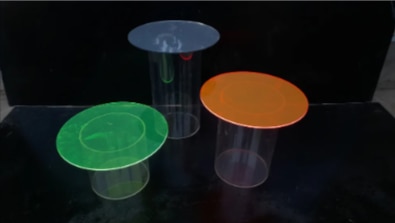 | Acrylic Display Stands Display Counter Stand Acrylic View product → |
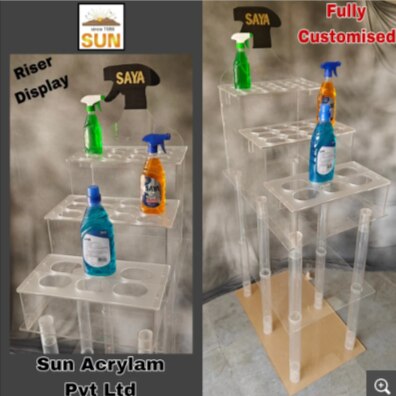 | Acrylic Display Stands Counter Top Displays View product → |
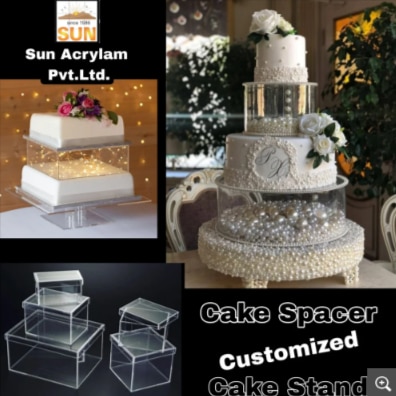 | Metal Cake Stands Acrylic Square Cake Separater View product → |