

Interior acrylic artwork is not one product: the image may be printed directly onto PMMA, mounted behind a clear sheet, or built with a white-ink opacity layer. By the end, you will be able to choose the construction, sheet finish, file specification, thickness, fixing method and supplier checks that suit your room rather than relying on a glossy sample alone.
Key takeaways
- Choose direct, reverse or face-mounted printing before selecting the photograph.
- Use a high-resolution image with correct colour profile and adequate crop space.
- Specify sheet thickness, polished edges, fixing method and movement allowance.
- Compare acrylic with glass, canvas, metal, PVC and paper for the installation site.
Choose the acrylic construction and sheet finish before choosing the image
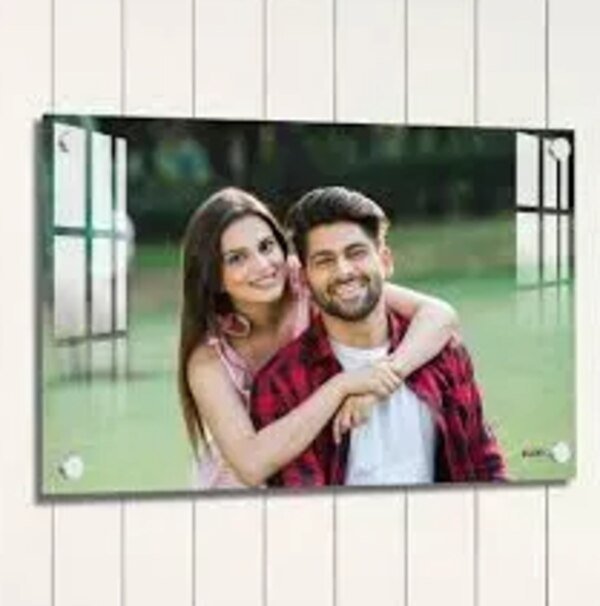
Specify the construction before selecting the photograph: direct-to-acrylic UV printing cures ink on the front surface, while reverse printing places the image behind clear PMMA for a deeper, protected gloss. A face-mounted print bonds a separately produced image to the sheet and suits projects where the print may need replacement.
Construction and sheet finish should match the interior setting:
| Setting | Recommended construction and material | Reason |
|---|---|---|
| Living room wall | Reverse print on clear acrylic with white-ink backing | Protects the image and gives strong contrast without losing depth |
| Office or reception | Direct UV print on opaque white acrylic | Controls reflections and keeps branding legible under overhead lighting |
| Retail display | Reverse print on clear or white-backed acrylic | Clear supports layered visuals; white-backed gives stronger colour at changing viewing angles |
| Partition or room divider | Print on frosted or translucent acrylic | Preserves privacy while allowing light through; avoid clear sheet if silhouettes are distracting |
| Hospitality feature wall | Reverse print on tinted, satin or clear acrylic | Tinted sheets create mood; satin reduces mirror-like reflections in busy spaces |
| Backlit panel | Reverse print on translucent acrylic with a tested white-ink layer | Prevents uneven hotspots and preserves image density when illuminated |
For acrylic printing for interiors, ask the supplier to name the process, PMMA grade, thickness, surface finish, mirror orientation and white-ink or opaque backing layer. Request a physical sample at the specified thickness under the project’s actual lighting.
A digital proof cannot show glare, edge appearance, translucency or the effect of the wall behind the panel. Approve custom acrylic photo printing only after that sample matches the intended viewing distance.
Prepare the photograph for sharp, colour-accurate acrylic printing
Start with the finished panel size and viewing distance, not the camera’s megapixel count. A file measuring 6,000 × 4,000 pixels provides about 200 pixels per inch at 30 × 20 inches; enlarge it further and fine hair, text and architectural lines will soften.
1. Divide each pixel dimension by the intended print dimension in inches. Check the result at 100% on screen: target about 150 pixels per inch for artwork viewed from several metres and about 300 pixels per inch for close viewing. Do not judge sharpness from a small preview.
2. Inspect the full-size file for focus, motion blur, compression blocks and clipped highlights. Save photographic artwork as TIFF or high-quality JPEG, retain the original pixel dimensions, and convert text or logos to vector artwork where possible.
3. Record the colour space and embedded ICC profile, such as sRGB or Adobe RGB, in the production brief. Ask the acrylic image printing service to state the printer profile, intended viewing light and whether the image is viewed through clear acrylic; otherwise neutral greys and skin tones can shift during conversion.
4. Approve a proof made on the specified acrylic grade. Clear, frosted, tinted, satin and opaque sheets alter contrast and saturation, while white ink stops the wall colour from changing transparent artwork.
5. Confirm whether the process is direct-to-acrylic UV printing or a separately printed image mounted behind the sheet. For reverse printing, verify mirror orientation, white-backing layer and colour/white layer order before production.
Specify thickness, edges, movement allowance and installation details
Do not specify a large acrylic panel by image dimensions alone. Tie thickness to the unsupported span, panel size, fixing pattern and lifting method. A 6 mm sheet may suit a framed, continuously supported panel; a floating panel with a broad unsupported centre needs greater stiffness or intermediate support.
Extra thickness cannot correct a badly supported wall.
Allow for thermal movement. Common PMMA expands by approximately 70–80 × 10⁻⁶ per °C, so a 2 m panel facing a 20°C temperature change can move roughly 2.8–3.2 mm. Use oversized holes or slotted fixings, washers and stand-offs that hold the sheet without clamping it tight. Do not force it into an exact opening.
Specify the edge finish in the quotation: machine-polished for an exposed edge, a small eased edge for safer handling, or a concealed edge inside a frame or channel. Protect the face with its original film during transport and installation, then remove it after drilling, cleaning and alignment.
Include these installation details before fabrication:
- Finished panel size, thickness, weight and centre of gravity
- Wall flatness tolerance and any required backing board
- Fixing type, hole diameter, hole locations and stand-off depth
- Lifting route, crew access and panel orientation
- Removability for image replacement or inspection
- Final cleaning method; use a soft cloth and acrylic-safe cleaner, never abrasive pads or solvent-heavy glass cleaner
A physical sample at the specified thickness and finish also exposes edge visibility, reflections and surface marks before the full panel is made.
Compare acrylic with glass, canvas, metal, PVC and paper before committing
Choose acrylic when you need a polished, colour-rich image with more impact resistance and less weight than ordinary glass. It is not automatically the best choice: a glossy sheet creates reflections, and scratches or solvent damage can permanently mark the surface.
| Material | Appearance and glare | Weight and durability | Better choice when |
|---|---|---|---|
| Acrylic | Deep, saturated image; glossy grades reflect light, while satin grades reduce glare | Lighter than glass and impact-resistant, but scratches and stress cracks remain risks | You need a premium wall panel, floating artwork or reception feature |
| Glass | Optically familiar and scratch-resistant; glare remains unless you specify anti-reflective glass | Heavier and more breakable than acrylic | The installation demands maximum surface hardness or museum-style viewing |
| Canvas | Soft, textured and low-glare; colours look less sharply photographic | Light, but vulnerable to dust, moisture and punctures | You want an artistic, warm finish rather than a crisp contemporary panel |
| Metal | Strong, modern and sometimes naturally reflective; image contrast depends on the coating | Durable and rigid, but heavier-looking and less forgiving of dents | Retail, hospitality or industrial interiors need a graphic statement |
| PVC | Flat, practical and available in matte finishes | Light and economical, but less premium and less scratch-resistant | Budget graphics, temporary displays or utility areas |
| Paper | Natural print detail with broad paper choices; glare depends on the coating | Light but easily damaged by moisture, handling and sunlight | Framed, replaceable artwork in a controlled interior |
For acrylic, ask whether the image is direct UV-printed or mounted behind the sheet. Reverse printing protects the image and adds depth, but replacement and edge appearance differ.
Use a satin surface near windows. Clean acrylic with a soft microfiber cloth and an approved cleaner; glass-safe solvent blends are not automatically acrylic-safe.
Evaluate an Ahmedabad supplier through a sample, quotation and installation plan
Judge the supplier on a physical sample and a buildable installation plan, not a phone image or the lowest square-metre price. A digital proof cannot reveal acrylic glare, rear-wall reflections, viewing-angle shifts, white-ink density or the effect of a satin, tinted or opaque sheet.
Ask for these items before approving production:
- A sample at the specified thickness and finish, using the intended image or a colour-critical crop.
- The printing construction: direct-to-acrylic UV inkjet or a separate photographic/inkjet print mounted behind acrylic.
- Confirmation that reverse printing is mirror-oriented, with the white-ink or opaque backing layer identified.
- A proof showing the file colour space, embedded ICC profile, intended viewing light and whether the image is viewed through clear material.
- A quotation separating sheet, printing, edge finishing, packing, delivery, installation and taxes; include panel weight and replacement cost.
- An installation drawing showing wall flatness, lifting route, fixing type, stand-off depth, hole locations and whether the panel can be removed.
- Written responsibility for scratches, chipped edges, colour mismatch and damage discovered during unpacking.
A search for acrylic photo printing near me finds a location, not architectural capability. Compare acrylic photo printing services in Ahmedabad by asking who fabricates, packs and installs the panel. SUN ACRYLAM PVT. LTD. belongs on the comparison list only after it provides these project-specific details, not because a catalogue lists acrylic printing.
A supplier who cannot explain the fixing method is not ready for a large interior panel.
Related products
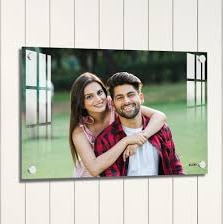 | Acrylic Printing Acrylic Photo Printing Services Acrylic Photo Printing Services View product → |
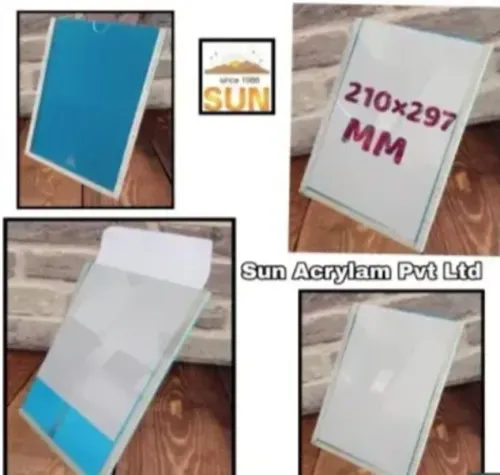
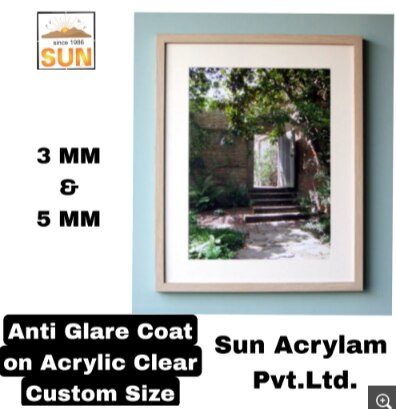 | Acrylic Transparent Sheet Acrylic Sheet Photo Frame View product → |
Frequently asked questions
Which acrylic construction suits an interior photo project?
Direct-to-acrylic UV printing places cured ink on the front surface, reverse printing places the image behind clear PMMA, and face mounting bonds a separate print to the sheet for easier replacement.
How do you prepare a photograph for acrylic printing?
Start with a high-resolution original, check its crop and aspect ratio, convert it to the supplier’s requested colour profile, and review a proof at the intended viewing size.
What installation details should you specify for an acrylic photo print?
Confirm sheet thickness, edge finish, corner treatment, fixing hardware, wall clearance, panel movement allowance and the installation surface before approving the quotation.
How does acrylic compare with glass, canvas, metal, PVC and paper?
Acrylic provides a glossy, rigid display with lower shatter risk than glass; canvas reduces reflections, metal suits a harder industrial look, PVC prioritises economy, and paper suits temporary or framed displays.
How should you evaluate an acrylic photo printing supplier in Ahmedabad?
Request a material and colour sample, an itemised quotation, production specifications, a proofing process and a written installation plan before placing the order.
Related product
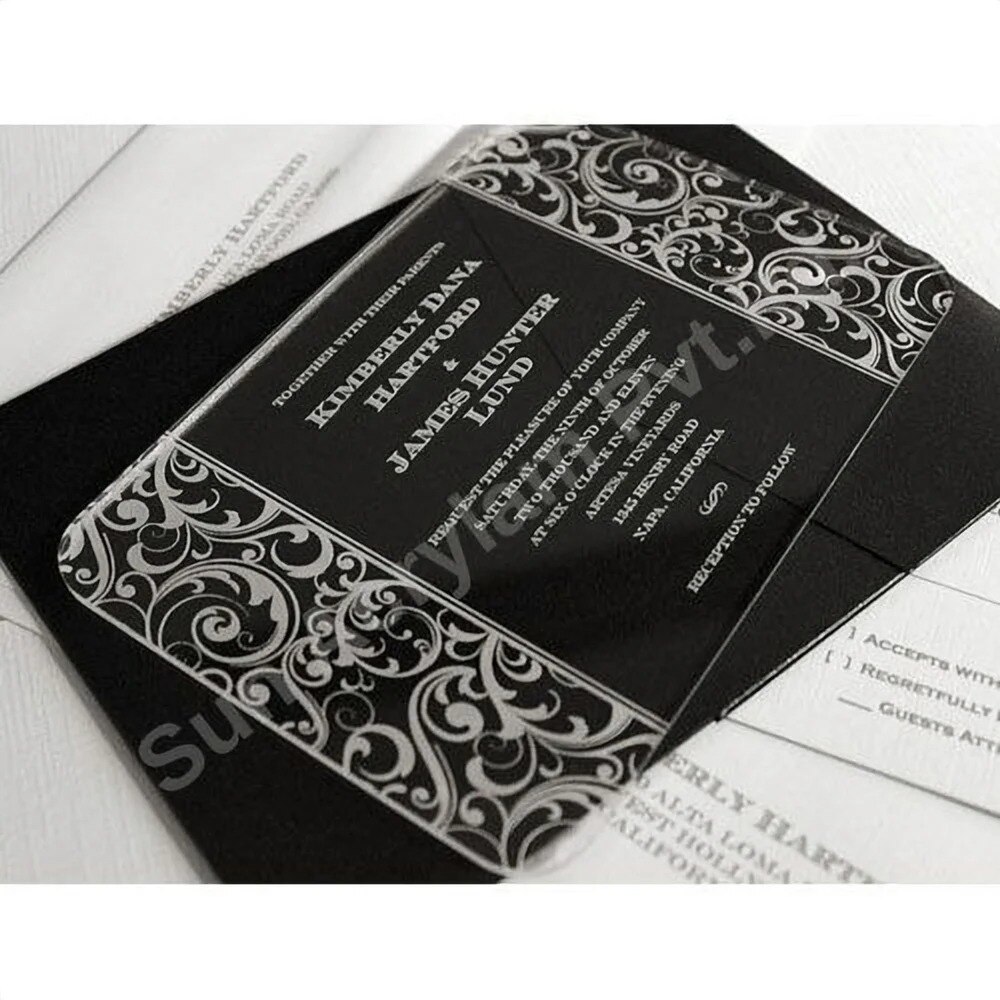 | Cutting Services Acrylic Invitation Card View product → |