


The right stencil depends on the surface, repeat pattern, paint, and number of times you need to use it—not just the artwork. By the end, you will be able to specify the stencil size, material, alignment method, and application process for a wall panel, feature wall, niche, ceiling, furniture panel, or commercial interior.
Key takeaways
- Use low-tack adhesive and a nearly dry roller to reduce paint bleed.
- Measure the repeat, border width, and panel dimensions before ordering.
- Choose flexible film for curves and rigid stencil sheets for flat panels.
- Approve a physical sample for alignment, scale, edges, and clean release.
How do you use a decorative wall-panel stencil without paint bleed?
Prevent paint bleed by controlling the surface, stencil, paint load, and lifting sequence. A decorative wall panel for painting stencils in Ahmedabad must be clean, dry, sound, cured, and free from dust, chalking paint, silicone, and residual moisture; seasonal humidity makes drying time especially important.
1. Protect skirting, sockets, switches, corners, and mouldings with masking film and low-tack tape. Repair loose coating, let filler and primer cure, then remove dust before positioning the stencil.
2. Place the stencil flat against the panel and secure it to suit the surface. Use low-tack tape on smooth areas, spray adhesive for flexible PET, magnets or clamps where the panel permits them, and a carrier frame when repeated positioning or overhead work demands control.
3. Use water-based acrylic or emulsion paint with a nearly dry roller or a short, firm stencil brush. Excess paint causes most bleeding. Hold the tool perpendicular to the sheet and work from the opening toward the surface, not sideways under the edge.
4. Lift the sheet vertically while the paint remains workable, then clean it before residue hardens. Let one colour dry before applying a second layer, or wet paint will smear and transfer.
5. Align each repeat with registration marks, holes, keyed corners, or a measured overlap—not by eye. Test grooved or embossed panels first: flexible PET follows ridges but can shift, while rigid acrylic holds its shape but may bridge over texture.
How should you size a stencil for a wall, panel, border, or niche?
Measure the usable surface, not the wall’s overall size, before cutting artwork for custom painting stencils in Ahmedabad. Mark every obstruction and leave no assumption to the installer.
1. Subtract skirting, cornices, mouldings, door trims, switches, sockets, corners, grout lines, and any area that cannot accept a flat stencil. Record the remaining width and height, including top and bottom margins.
2. For a repeated design, calculate repeat width as artwork width plus the planned gap or overlap. Divide the usable wall width by that repeat, then adjust the first and last margins so neither edge ends with a narrow fragment. Record the final repeat, overlap, margins, and registration-mark positions.
3. Size a single decorative panel by its finished outside dimensions: it must fit inside the frame with clearance from the moulding. Specify the separate usable artwork area. Borders need a repeat that turns cleanly at corners; columns and niches may need narrower sheets or a split pattern.
4. Measure a furniture stencil from the removable panel, not the cabinet carcass. For ceilings, choose a lightweight carrier and check that the layout remains manageable at the installer’s reach.
5. State whether quoted dimensions include a surrounding frame, tabs, or waste margin. For multi-colour work, add registration holes or keyed corners to every layer so alignment does not depend on sight alone.
Recheck the drawing against the actual surface before cutting. Curves, grout recesses, and mouldings can reduce the usable area after the first measurement.
What pattern scale and stencil format suit your interior?
Choose the scale by viewing distance and the wall’s role. A small residential room or one accent section suits a modest repeat with generous open space; a full feature wall can carry a larger motif that remains legible from across the room.
Avoid a dense repeat in a narrow room: it makes corners and furniture look crowded.
Hospitality lobbies and retail displays need a repeat that survives close inspection across many square metres. Offices usually suit restrained geometry and clear brand colours. Decide the format from the production brief:
| Option | Best suited to | Main limitation |
|---|---|---|
| Reusable stencil sheet | Repeated painted motifs | Requires alignment and paint control |
| Adhesive sticker or one-time mask | Short runs on smooth surfaces | Limited reuse |
| Rigid panel template | Flat surfaces needing precise positioning | Bridges uneven texture |
| Decal or wallpaper | Finished graphic without painting | Less adaptable after installation |
| Hand-painted mural | Unique variation | Higher skilled-labour demand |
| Textured coating | Relief and tactile depth | Changes wall surface, not just colour |
| Digitally printed panel | Detailed imagery without repeat alignment | Requires print and panel preparation |
For custom painting stencils in Ahmedabad, choose PET or Mylar when flexibility, transparency, cleaning, and repeated use matter. Acrylic gives clear, rigid positioning on flat areas but can crack at narrow bridges or suffer solvent crazing. Paper suits one use; metal is durable and dimensionally stable but heavier and less forgiving on uneven walls.
What should you specify when comparing a stencil supplier in Ahmedabad?
“Precision” is not a procurement specification. Ask a decorative wall panel stencil supplier in Ahmedabad for measurable details:
- Polymer and sheet thickness; for acrylic, state whether it is cast or extruded.
- Finished outside dimensions, usable artwork area, flexibility, transparency, minimum bridge width, smallest cut feature, dimensional tolerance, and expected number of reuses.
- Whether the quoted size includes registration tabs, keyed corners, a surrounding frame, or a waste margin.
- PET or polyester for repeated rolling, washing, and moderate curves; polypropylene where moisture or solvent resistance matters; acrylic for a rigid positioning template, not repeated folding or flexing.
- A small material-and-paint compatibility test. Water-based acrylic or emulsion paint and strong solvent systems affect plastics differently.
- The file-conversion method: enclosed islands need bridges, narrow supports need reinforcement, and fine negative spaces need testing before production.
- Cutting process and its consequence. Laser cutting gives repeatable outlines but leaves a heat-affected edge; knife cutting or routing may better suit a different thickness or production volume. Do not treat PVC as interchangeable with laser-cut PET or acrylic because chlorine-containing fumes can corrode equipment.
- For a reusable production stencil, rounded internal corners, protected registration features, polymer-compatible cleaning instructions, and packaging that prevents curling, kinking, and dust contamination.
A wall stencil manufacturer in Ahmedabad should distinguish a one-time mask from a reusable stencil. SUN ACRYLAM PVT. LTD. can be evaluated against this same documented checklist rather than an unmeasured claim of precision.
Related products
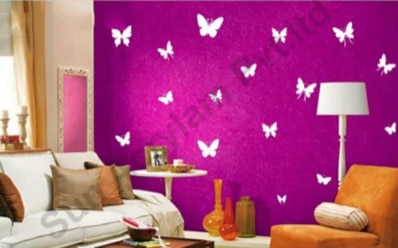 | Painting Stencil Decorative Wall Panel View product → |
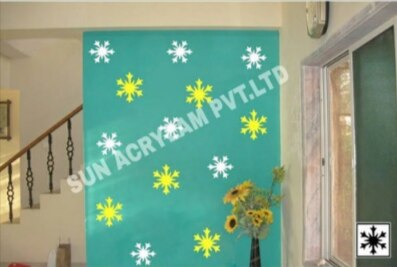 | Painting Stencil Wall Paint Sticker Stencils View product → |
How do you approve the finished stencil for a custom interior?
Approve it only after a physical sample works on the actual panel, not merely after the drawing looks accurate.
1. Cut one sample in the proposed material and test it on the real panel texture, paint, roller or brush, and cleaning routine. Record edge sharpness, paint bleed, lifting at ridges, bridge strength, and any dimensional change after washing.
2. Compare the material to the surface. Flexible PET film can conform to relief but may distort under tension and increase bleed. Rigid acrylic preserves geometry on flat areas but can bridge over grooves, leaving unpainted gaps. Reject the sample if its behaviour requires an application method the installer cannot repeat.
3. For multiple colours, test registration holes, external marks, or keyed corners on the panel. Check the first repeat, colour-to-colour alignment, and the final repeat against the starting position; visual alignment alone produces cumulative drift across a feature wall.
4. Keep coating tests separate from stencil acceptance. ISO 2409 and ASTM D3359 assess paint adhesion to a substrate; they do not prove stencil accuracy, cleanability, or service life.
5. Approve the sample before ordering a full set, especially for hospitality or retail installations. When comparing a decorative wall panel stencil supplier in Ahmedabad with a wall stencil manufacturer in Ahmedabad, require documented dimensions, material thickness, sample results, and application instructions.
Store approved sheets flat, clean, dry, and away from heat and kinks between uses.
Frequently asked questions
How do you use a decorative wall-panel stencil without paint bleed?
Start with a clean, dry, cured, dust-free surface. Secure the stencil with low-tack adhesive or spray adhesive, remove excess paint from the roller, apply thin coats, and lift the stencil vertically before the paint skins over.
How should you size a stencil for a wall, panel, border, or niche?
Measure the usable height and width, then account for margins, corners, outlets, joints, and the pattern repeat. Request a scaled proof showing the first and last repeat before cutting the stencil.
What pattern scale and stencil format suit your interior?
Use small repeats for narrow borders and niches, medium repeats for standard panels, and large repeats for broad feature walls. Choose flexible film for curves and rigid sheets for flat, repeated applications.
What should you specify when comparing a stencil supplier in Ahmedabad?
Provide the finished dimensions, material thickness, artwork file, repeat size, registration marks, surface type, paint method, quantity, and delivery requirement. Ask how the supplier handles fine bridges, corners, cleaning, and replacement sections.
How do you approve the finished stencil for a custom interior?
Test it on the actual or equivalent substrate and review registration, repeat spacing, paint coverage, edge sharpness, release, corner fit, and cleanability. Approve the physical sample before authorising the full set.
Related products
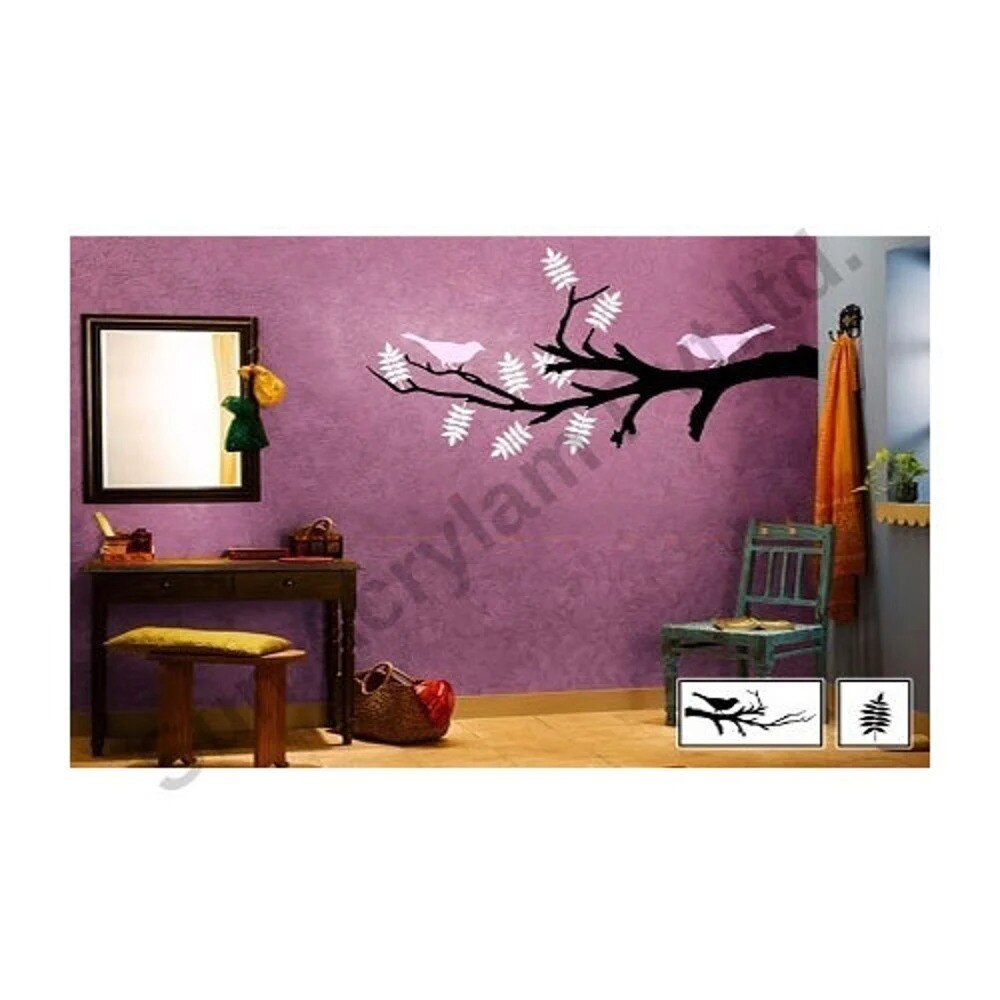 | Laser Cutting Services Wall Decor Stencil View product → |
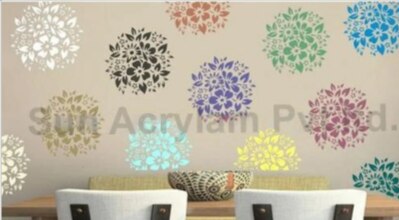 | Painting Stencil Wall Stencil customized View product → |
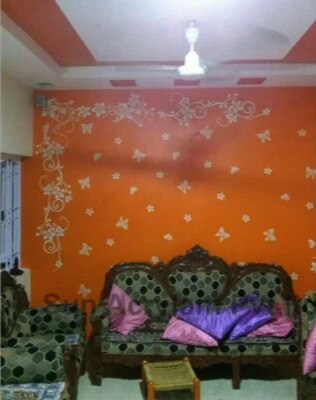 | Painting Stencil Wall Painting Stencil View product → |
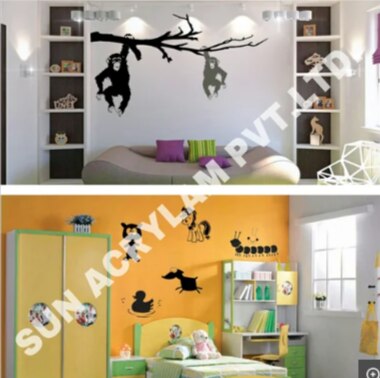 | Painting Stencil Cartoon Wall Decor View product → |