

A sign can fail before installation if the plywood grade, adhesive, artwork, or edge treatment is wrong. You will be able to choose a suitable board, prepare a production-ready design, compare sign-making methods, and brief a fabricator with specifications that reduce rework.
Key takeaways
- Use 3 mm plywood for light indoor layers and 6 mm for rigid signs.
- Convert logos and Gujarati text to clean vector outlines before cutting.
- Choose through-cutting, engraving, routing, or layered construction for the intended effect.
- Seal every plywood surface and inspect edges, joints, and mounting points.
Which plywood grades and thicknesses suit a custom sign?
3 mm suits lightweight layered lettering and indoor plaques; 6 mm gives rigid wall signs and hanging boards. Larger outdoor signs need a stiffened, thicker, or laminated construction with backing or ribs—not simply one very thick sheet, which can warp and remain heavy.
| Grade | CO₂-laser behaviour | Best use |
|---|---|---|
| Birch plywood | Dense, consistent veneers give cleaner cuts and faces; glue lines still char | Visible lettering and premium signs |
| MDF-core plywood | Homogeneous core cuts predictably but creates more dust and a dark edge | Painted indoor panels |
| Commercial plywood | Knots, voids, variable veneers and glue lines cause smoke and incomplete cuts | Simple, tested painted signs |
| Veneer-core plywood | Attractive face, but uneven core density can leave rough edges and local failures | Decorative faces after a sample cut |
Moisture makes sheets swell and slows or spoils cuts; dense veneer increases heat and edge charring. Knots and voids interrupt narrow letters, while formaldehyde-releasing resins increase fumes and require effective extraction. Reject PVC, vinyl, unknown laminates, and boards with unidentified coatings or adhesives.
For custom plywood signs in Ahmedabad, give the fabricator:
- Species or approved substitute, nominal thickness and tolerance
- Face quality, grain direction, and acceptable edge charring
- Quantity, nesting orientation, finish, mounting holes, and engraving requirements
- A first-article approval before the full batch
Ask for a test coupon from the actual sheet. A plywood laser cutting service cannot transfer settings reliably between brands.
How do you turn a logo, Gujarati text, or sketch into a cut-ready file?
Send production artwork as SVG, DXF, AI, or a vector PDF—not a screenshot or low-resolution JPEG. For laser cut plywood in Ahmedabad, the file must show exactly what the machine will cut, score, or engrave.
1. Convert every font to outlines before sending it. Use closed paths for through-cuts, place cut, score, and engraving on separate named layers, and remove duplicate lines; doubled paths can make the laser pass twice and scorch the edge.
2. Inspect Gujarati lettering at its final physical size, not only on a monitor. Preserve counters inside characters, add bridges where an island would fall out, and approve a customer proof showing the outlined letters before production.
3. Test the minimum stroke width, letter height, spacing between features, and internal corner radii against the plywood thickness and laser beam. A narrow bridge can burn away, close spacing can merge through-cuts, and the beam’s rounded path can change a sharp inside corner.
4. Turn a hand-drawn sign into artwork by scanning it, tracing the intended geometry, correcting uneven joins, confirming the scale, and approving a plotted or paper proof before cutting. Do not let the scanner’s distortion or an accidental wobble define the finished sign.
Have the fabricator confirm the test dimensions from the actual plywood batch and machine settings. Plywood voids and glue lines can leave local areas uncut even when the outer perimeter succeeds, so a proof exposes failures in small lettering, narrow bridges, and intricate details before the full panel is used.
Should the sign use through-cut letters, engraving, routing, or layers?
Choose the construction method by the sign’s visual result and physical use, not by cutting speed alone. Each method creates a different face, edge, and mounting requirement.
| Option | Visual result | Best use |
|---|---|---|
| Through-cut letters | Open negative space; the wall or backing shows through | Bold signage, stencils, and designs needing strong contrast |
| Engraving | Letters remain in the intact sign face as shallow recessed marks | Plaques, small text, logos, and weather-protected indoor signs |
| Routing | Deeper recesses with different edge geometry than a laser beam produces | Thick lettering, tactile grooves, and designs requiring a broad or shaped channel |
| Layered plywood | Raised text, cast shadows, and colour separation between pieces | Dimensional logos, branded displays, and two-tone signs |
Laser-cut plywood panels preserve fine internal detail, but the beam leaves a tapered, heat-affected edge and rounds internal corners at beam scale. Check narrow strokes, minimum bridges, counters, slots, tabs, interlocking parts, and nested components instead of assuming perfect mechanical geometry.
Use measured kerf compensation for every fitted feature; never apply a generic value. Require a clearance-test comb or fit gauge cut on the actual machine, lens, power and speed setting, plywood batch, and thickness, then use that result to size press-fit parts.
A core void can cause a local incomplete cut even when the perimeter succeeds, especially around narrow bridges and small lettering. Approve a proof cut before production.
How should plywood signs be finished, sealed, and checked for safety?
A dark, carbonised edge is normal after laser cutting plywood, but it matters on a natural-edge sign. Clean or lightly abrade it before primer and paint: soot can weaken adhesion and bleed through light colours, while the edge absorbs primer differently from the face veneer.
1. Inspect the cut. Exposed end grain, holes, mounting penetrations, joints, and laser-cut edges absorb water first. For an outdoor sign, apply a compatible coating system to every face, edge, hole, penetration, and joint; sealing only the front face invites swelling and veneer lifting.
2. Specify air assist and effective smoke extraction. Air assist removes heat and smoke from the cut, while extraction limits brown residue and fire risk. Ask the operator to keep the optics and bed clean, because deposited smoke and debris can make engraving muddy and ignite.
3. Treat the machine as attended equipment. Resin pockets, loose veneer fibres, and accumulated debris can catch fire, so the operator must remain present and follow the machine’s specified fire-safety procedure. Never assume a short job is safe to leave unattended.
4. Separate laser smoke from sanding dust. Edge cleaning and light abrasion need local dust control and respiratory protection selected under the workshop’s risk assessment; visible smoke extraction does not make wood dust safe.
Approve a physical sample when engraved shading, tiny text, or uniform depth matters. Veneers, glue lines, and core voids absorb the beam unevenly, so a screen proof cannot reliably show the final depth, contrast, or edge appearance.
What should you ask a local plywood laser-cutting supplier before ordering?
A low quote can hide subcontracting, unusable edges, or delivery charges. Ask a laser cutting plywood near me supplier these questions before approving the job:
1. Is cutting performed in-house? State the machine type, maximum sheet size, maximum thickness, material source, extraction arrangement, and fire-safety procedure. Ask whether an operator remains present while the laser runs.
2. Will you run a test cut or coupon at this plywood thickness and from this batch? A plywood laser cutting service must not transfer settings from another brand: glue, veneer density, voids, and flatness change the result. Request a physical sample showing cut edge, engraving, and face quality.
3. Does the price include artwork cleanup, material wastage, nesting orientation, test coupons, finishing, mounting holes, packaging, and delivery? Confirm whether routing, drilling, sanding, or painting is charged separately.
4. Require the quote to name the plywood type or approved substitute, thickness and tolerance, quantity, grain direction, face quality, acceptable edge appearance or charring, finish, engraving appearance, mounting-hole sizes, and first-article approval.
5. Ask how narrow bridges, internal corners, slots, and press-fit parts will be checked. Laser cutting plywood near me is not automatically comparable with routing: a laser preserves fine detail but leaves a heat-affected, tapered edge.
For buyers comparing laser cut plywood in ahmedabad suppliers, SUN ACRYLAM PVT. LTD. can be considered alongside other fabricators using these same material, proofing, safety, and pricing questions.
Related products
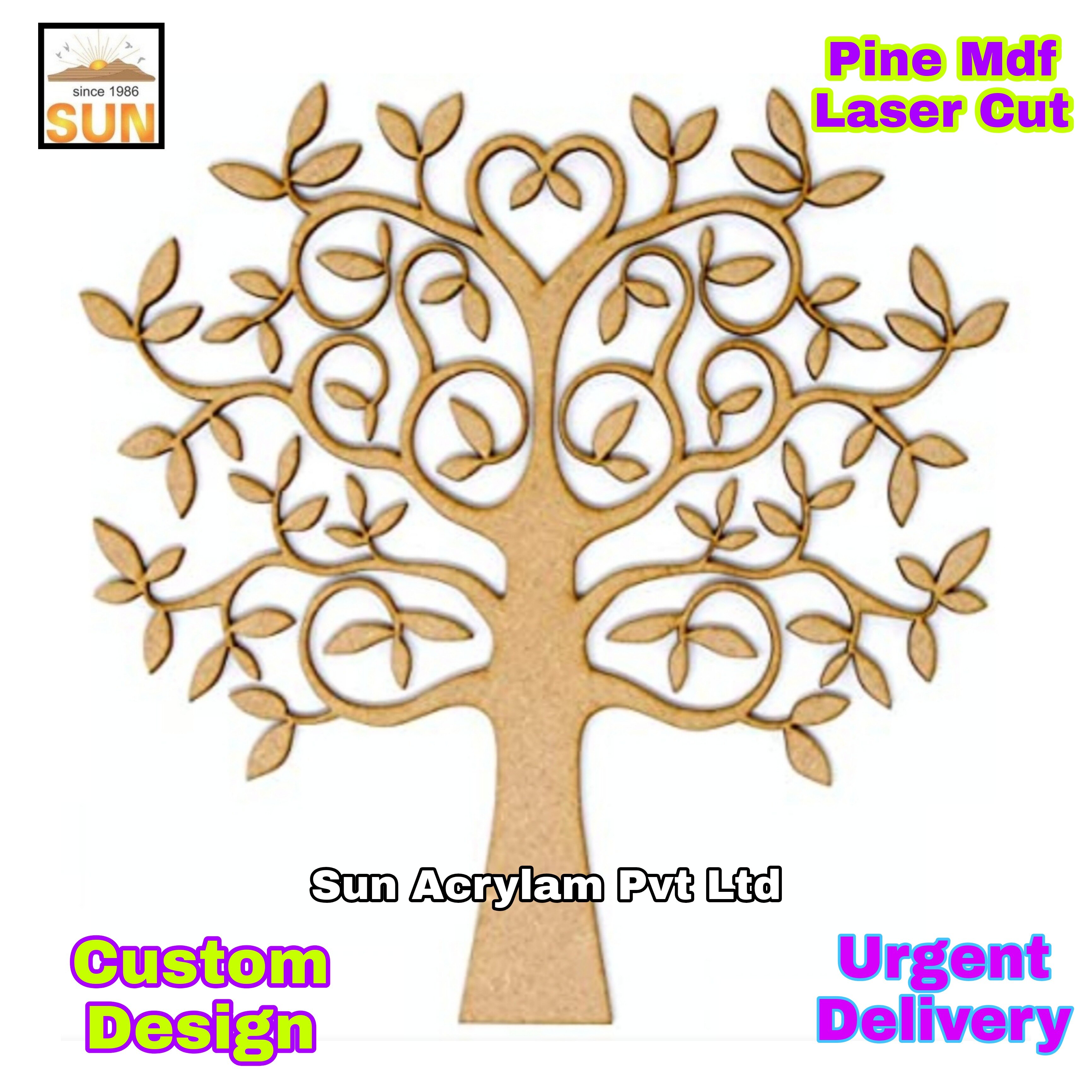 | Wooden Cutout In today’s fast-paced world of design and manufacturing, laser cutting ply sheets has emerged as one of the most efficient and precise methods for... View product → |
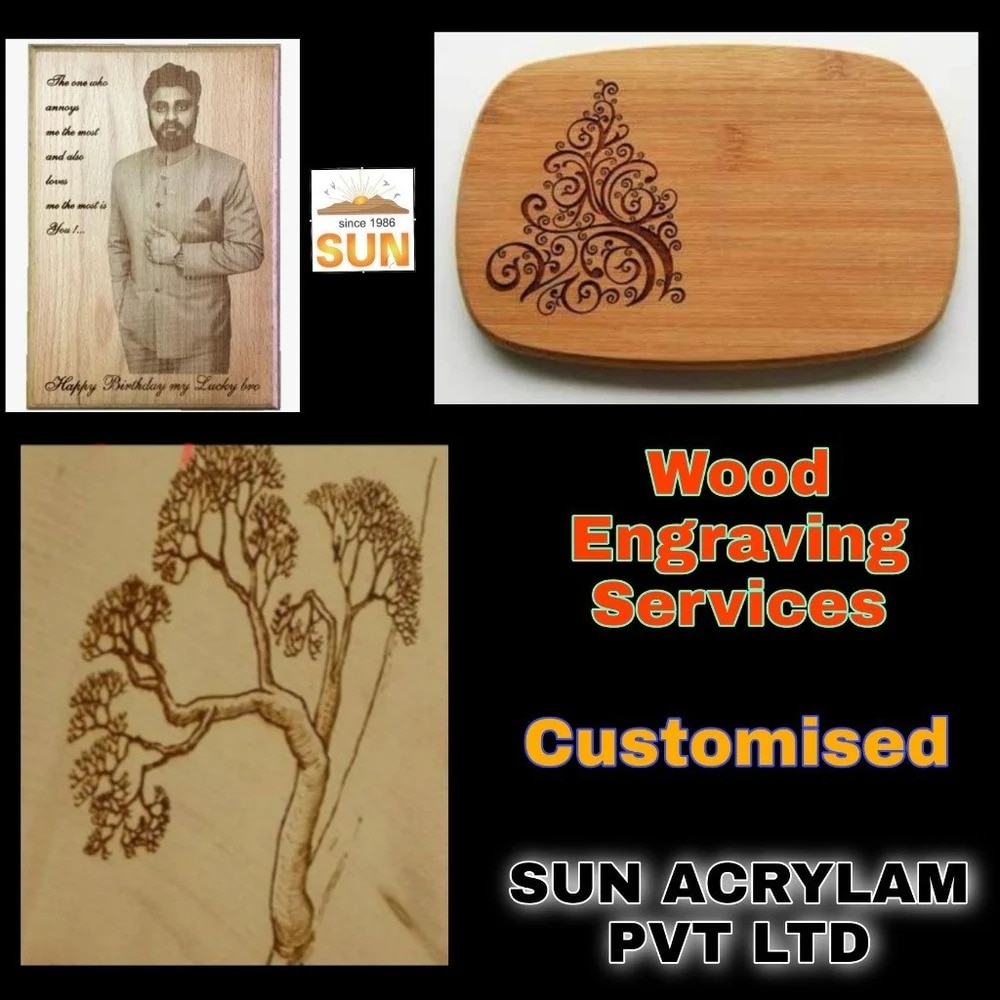 | Laser Cutting Services Plywood Laser Cutting Service View product → |
Frequently asked questions
Which plywood thickness suits a custom sign?
Use 3 mm plywood for lightweight layered lettering and indoor plaques. Use 6 mm for rigid wall signs and hanging boards. Larger outdoor signs need backing, ribs, or a laminated construction to limit flexing and warping.
How do you prepare a logo, Gujarati text, or sketch for laser cutting?
Convert the artwork into clean vector outlines, separate cut lines from engraving areas, remove duplicate paths, and check that enclosed letters and small details remain connected. Confirm the final dimensions before exporting the cut-ready file.
When should you choose through-cutting, engraving, routing, or layers?
Use through-cutting for separate letters or shapes, engraving for surface details, routing for deeper or larger recesses, and layered plywood for raised lettering and stronger visual contrast.
How should plywood signs be finished and checked?
Sand exposed edges, apply a suitable primer or paint, seal all faces and edges against moisture, and inspect for splinters, loose layers, sharp points, weak joints, and secure mounting before installation.
What should you ask a plywood laser-cutting supplier in Ahmedabad?
Ask which plywood grade and thickness they recommend, whether they can inspect your vector file, what cutting bed size they use, how they handle Gujarati text and small details, which finishing options are available, and how they check fit, edges, and mounting holes.
Related product
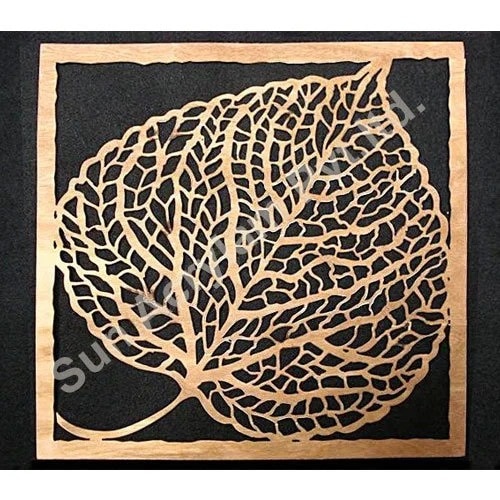 | Cutting Services Plywood Laser Cutting Job work Plywood Laser Cutting Job work View product → |