

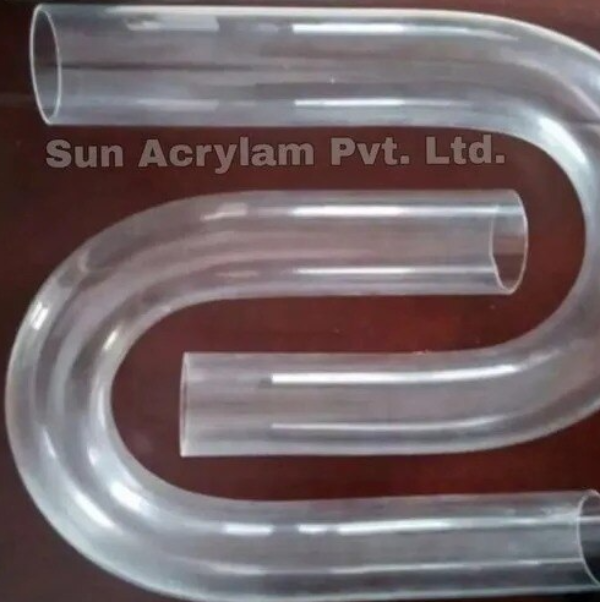
Acrylic pipes combine transparency, low weight, corrosion resistance, and decorative appeal. These properties make them useful in applications where both visual access and functional performance are important.
Unlike metal pipes, acrylic pipes allow users to observe internal movement, liquid levels, lighting effects, or product flow. Unlike ordinary glass, they are easier to machine, transport, and integrate into fabricated assemblies.
Understanding their suitable uses helps buyers communicate precise requirements to an Acrylic Pipe Manufacturer.
Transparent Flow Demonstration Systems
One of the most practical uses of acrylic pipe is in demonstration equipment. Transparent sections allow operators, students, or customers to observe the movement of liquids, air, particles, or small components.
Typical applications include:
- Educational fluid-flow models
- Laboratory demonstration units
- Equipment prototypes
- Process visualisation systems
- Water circulation displays
- Training equipment
These systems may not always operate under demanding industrial pressure, but dimensional accuracy and joint quality remain important.
Retail Display Installations
Retail fixture manufacturers use acrylic pipes to create lightweight, modern display elements. Pipes can hold products, support decorative structures, organise merchandise, or form illuminated visual features.
Clear pipes help maintain an open appearance, while coloured or frosted versions can support a brand’s visual identity. They can also be combined with acrylic sheets, rods, LED lighting, and fabricated bases.
For retail projects in Ahmedabad, transport and installation requirements should be considered during the design stage. Long or oversized sections may require specialised packaging to avoid scratches and impact damage.
Lighting Features
Acrylic pipes are frequently incorporated into decorative lighting products. Their transparency and ability to diffuse or transmit light make them suitable for:
- LED lighting housings
- Decorative columns
- Exhibition installations
- Illuminated retail fixtures
- Event décor
- Architectural lighting features
The finish of the pipe affects the visual result. Clear material creates a different effect from frosted, translucent, or textured surfaces. Designers should test the chosen light source with a physical sample before approving production.
Protective Covers
Acrylic pipe sections can function as covers for delicate instruments, display objects, lighting components, and moving parts. Their visibility allows inspection without removing the protective barrier.
The required wall thickness depends on the component being protected, the expected handling conditions, and the mounting arrangement. Where impact is a significant concern, buyers should compare acrylic with polycarbonate before finalising the material.
Decorative Architecture
Architects and interior designers may use acrylic pipes in partitions, feature walls, ceiling elements, furniture details, and art installations. Their lightweight construction enables visual forms that may be difficult to create with glass.
Decorative projects usually require careful attention to polishing, joint concealment, colour consistency, and surface protection. Even a small scratch may become noticeable under focused lighting.
Laboratory and Instrument Components
Acrylic pipes may be used in laboratory setups, prototype chambers, sample holders, inspection devices, and non-critical equipment assemblies.
The design should account for temperature, pressure, chemical exposure, and cleaning methods. Acrylic is compatible with many environments, but it should not be assumed to resist every solvent or chemical.
Technical testing becomes essential when the pipe will contact substances beyond water or mild solutions.
Aquarium and Water Display Features
Large transparent tubes can create striking water displays, bubble columns, and decorative aquarium features. These applications depend on proper wall thickness, reliable sealing, and stable support structures.
Water pressure increases with height, so decorative appearance should never replace engineering assessment. Designers should consider the full water load, connection method, maintenance access, and long-term joint performance.
Information an Acrylic Pipe Manufacturer Needs
Accurate enquiries allow manufacturers to assess feasibility and quote correctly. Buyers should provide:
- Outer diameter
- Inner diameter or wall thickness
- Required length
- Colour and transparency
- Quantity
- End finish
- Dimensional tolerance
- Intended application
- Cutting, drilling, or fabrication needs
- Expected temperature and pressure conditions
An experienced Acrylic Pipe Manufacturer may also identify practical limitations before production begins.
Across Ahmedabad and Gujarat, acrylic pipes support applications ranging from engineering demonstrations to illuminated interiors. Their strongest advantage is the ability to combine functional form with visual clarity, provided the material and dimensions are selected for the actual operating conditions.