

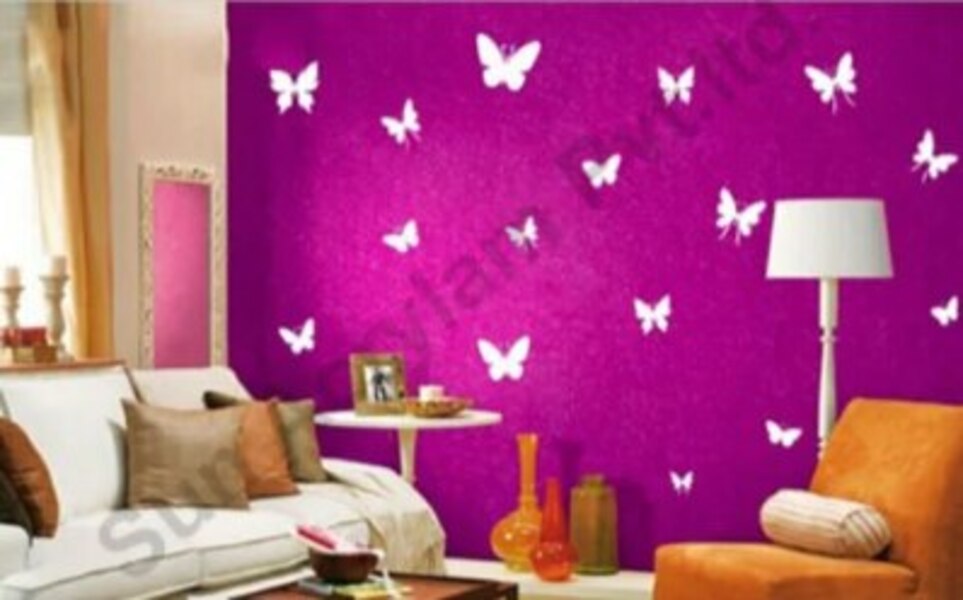
A wall pattern that looks simple on one panel can drift, bleed, or break when repeated across a reception desk, retail wall, restaurant booth, clinic corridor, hotel lobby, or exhibition backdrop. You will be able to choose the right stencil system, prepare manufacturable artwork, specify dimensions, and plan registration and testing before production begins.
Key takeaways
- Map the full repeat before cutting any stencil.
- Match stencil material to the panel surface and paint method.
- Specify dimensions, gaps, tolerances, and finish for a clear quote.
- Test the stencil on the actual panel before installation.
Where business wall panel stencils add value—and where they create work
A business wall panel stencil adds value when you need the same motif repeated across multiple surfaces without commissioning separate graphics.
Use it for:
- Reception feature walls and office partitions
- Retail displays and restaurant interiors
- Clinic wayfinding zones and hotel corridors
- Exhibition backdrops and branded panel systems
A decorative wall panel stencil is the mask used to transfer paint. It is not the wall panel itself, a wallpaper print, or a carved finish. Identify the required treatment before ordering:
- Paint stencil: a reusable sheet for rolling, brushing, or spraying a repeatable pattern.
- Wall paint sticker stencil: an adhesive mask for short runs, sharper edges, or surfaces where holding a loose sheet is difficult.
- Routing or engraving mask: a guide or resist for machining, requiring different rigidity and edge control.
- Rigid decorative panel: the finished sheet, with its design cut, engraved, or perforated into it.
Choose a stencil for repeated motifs, borders, and simple logo-scale graphics. Choose digitally printed adhesive film or wallpaper for photographic detail and seamless imagery; choose direct painting or carved panels when you need a finished surface without repeated masking.
A stencil creates work on dusty, textured, low-surface-energy laminates or uneven joints. Test it on the actual panel coating: bleed, poor adhesion, cleaning damage, and registration errors will not appear in the artwork file.
Plan the repeat before anyone cuts the stencil
A custom painting stencil for wall panels needs a repeat plan before cutting begins. Record each panel’s finished width and height, the motif’s repeat width and height, and the intended margins from every edge. A repeat that divides evenly into the panel prevents a narrow, noticeable fragment at the far end.
1. Set a fixed datum, such as the top-left panel corner, and mark the horizontal and vertical pitch from it. Do not align each sheet by eye; small errors accumulate across a long wall.
2. Draw overlap zones at every sheet join. Add numbered sections, registration marks, and alignment holes so the next stencil lands on the previous motif instead of shifting the pattern.
3. Create separate placement drawings for inside corners, outside corners, doors, sockets, skirting, and service covers. Show the distance from each obstruction to the nearest motif centre, not just the overall panel edge.
4. Keep a defined quiet margin around openings and trim. A motif that ends 8 mm from a socket may look intentional; one that is sliced by its faceplate looks like a layout error.
5. Map irregular surfaces, bevels, panel gaps, and curved returns at full size. Split the stencil at a controlled seam and add bridges to enclosed areas in letters, logos, or floral details, or those centres will fall out during cutting.
Check the layout on the actual panel coating or laminate before production. Texture, dust, low-surface-energy finishes, and open joints can alter placement and cause bleed even when every dimension is correct.
Choose the surface treatment, stencil material, and application method
Choose the treatment by expected repetition, surface condition, and finish—not by artwork alone. A stencil creates a painted pattern; wallpaper, carved panels, and printed film become the finished surface.
| Option | Choose it when | Main limitation |
|---|---|---|
| Reusable PET | You need repeated paint impressions on flat, curved, or lightly textured panels; thin polyester flexes without becoming brittle. | Solvent paint, harsh cleaning, and aggressive scraping shorten its life. |
| Rigid sheet | You need accurate repeats on smooth, flat panels with simple handling. | It will not conform well to curves, joints, or texture. |
| Metal stencil for decorative wall panels | You need long production runs, dimensional stability, solvent exposure, or aggressive cleaning. | Metal costs more, weighs more, and needs deburred edges; stainless steel suits wet workflows better than mild steel. |
| Wall paint sticker stencil | You need a quick, low-volume pattern with adhesive holding the mask in place. | Removal can lift weak paint, leave residue, or fail on dusty textured surfaces. |
| Direct painting | You need a one-off mural, soft edges, or a skilled painter’s custom variation. | It is slower to repeat precisely across many panels. |
| Wallpaper | You need full-surface coverage, fast installation, or a photographic and continuous pattern. | Damaged sections are harder to touch up invisibly. |
| Carved panels | You need permanent depth, shadow, and impact resistance. | They add weight, fabrication time, and installation complexity. |
| Digitally printed adhesive film | You need detailed graphics, gradients, or photographic colour without wet paint. | Scratches, edge lifting, and colour mismatch can appear at joins. |
Test the chosen method on the actual coating or laminate. Texture, dust, low-energy surfaces, and panel joints can defeat an accurately cut stencil.
Give an Ahmedabad manufacturer a specification that can be quoted and checked
A decorative wall panel for stencil manufacturer in Ahmedabad needs a production brief, not “cut to artwork.” State whether you need a paint stencil, routing or engraving mask, or rigid decorative panel; each uses different materials and dimensional limits.
Give the decorative wall panel stencil supplier in Ahmedabad these quote fields:
- Artwork: 1:1 vector AI, SVG, or DXF file, with scale, repeat dimensions, panel joins, and a placement drawing.
- Geometry: one connected stencil design, with bridges across enclosed areas in A, O, P, R, logos, and floral details.
- Material: sheet type and grade, such as PET, acrylic, or metal; thickness; surface finish; and maximum outside size.
- Cutting limits: smallest slot, narrowest bridge, internal corner requirement, edge tolerance, and whether laser heat marks or CNC tool radii are acceptable.
- Use: paint type, roller or spray application, expected quantity, reuse count, solvent exposure, and cleaning method.
- Registration: numbered sheets, datum marks, alignment holes, overlap zones, and panel-specific corner or socket references.
SUN ACRYLAM PVT. LTD. can use this information to separate a flexible painting stencil from a rigid cut panel before quoting.
Approve a physical sample before the full batch. Measure the cut motif and outside dimensions, inspect every bridge for cracks, check edges for burrs or melted beads, verify registration-hole positions, fit the sheet against the actual panel, and inspect a painted impression for bleed, missing detail, and repeat alignment.
A correct digital file cannot reveal those failures.
Related products
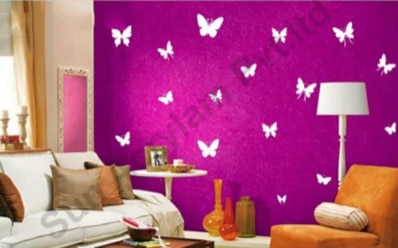 | Painting Stencil Decorative Wall Panel View product → |
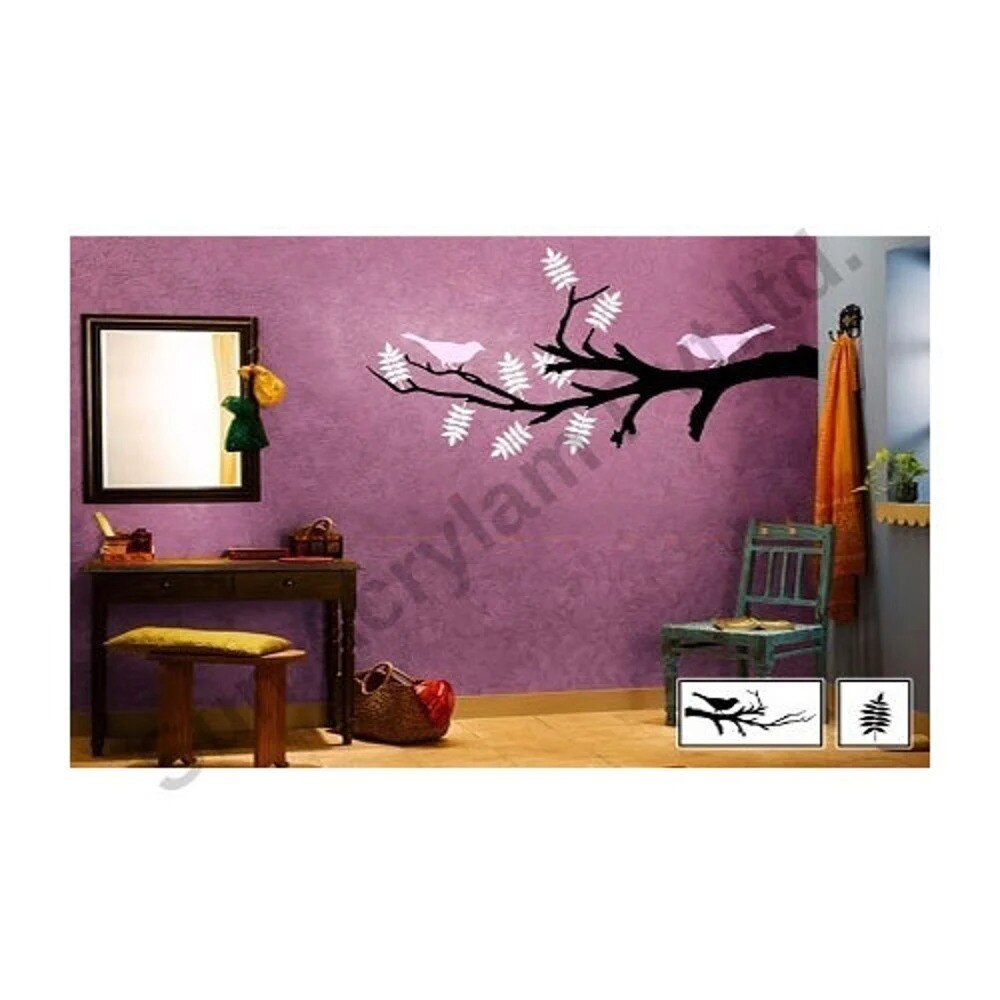 | Laser Cutting Services Wall Decor Stencil View product → |
Test the impression on the actual panel before installation
Use a spare section of the actual coated or laminated panel, not cardboard or a smooth sample board. A business wall panel stencil can fit perfectly yet fail on textured paint, dusty laminate, low-surface-energy finishes, or a panel joint.
1. Clean and dry the test area exactly as you will clean the installed panels. Apply the intended paint with the intended roller, brush, or spray method. After curing, press and remove low-tack tape from the painted area; lifting, powdering, or peeling shows poor adhesion.
2. Secure the stencil without distorting it and apply a light coat rather than flooding the openings. Inspect edges, corners, bridges, and fine slots for feathering or paint pooling. A second impression beside the first reveals whether bleed increases as paint builds on the stencil.
3. Check the actual cut dimensions, bridge strength, edge burrs or melt beads, registration-hole position, and clearance at joints, corners, sockets, and skirting. Test the fit on every panel condition you will encounter.
4. Clean the stencil using the specified method, then repeat the impression at least three times. Record cleaning time, paint residue, warping, stretching, and registration drift.
5. Approve the custom painting stencil for wall panels only when each impression matches the approved sample, the stencil survives cleaning, and the paint remains bonded after curing. Reject it if one repeat needs different pressure or alignment.
Frequently asked questions
Where do business wall panel stencils add value?
They add value when you need one motif repeated across multiple panels or surfaces. They create extra work when the panel surface is uneven, the pattern needs frequent alignment changes, or installation access is limited.
What should you plan before cutting a wall panel stencil?
Plan the complete repeat, including motif width, height, registration marks, edge treatment, spacing, and how the design meets corners or panel joints.
How do you choose a stencil material and application method?
Choose the material according to the panel surface, number of uses, detail level, paint type, and cleaning requirements. Compare flexible sheet stencils with metal stencils when durability or fine repeat work matters.
What should you include in a stencil specification for an Ahmedabad manufacturer?
Include the panel material, panel dimensions, motif artwork, repeat size, stencil thickness, cut-line file, open-area dimensions, quantity, tolerances, finish, and application method.
Why test the stencil on the actual wall panel?
A test reveals paint bleed, surface adhesion problems, registration errors, contrast issues, and pattern distortion before the full installation begins.
Related products
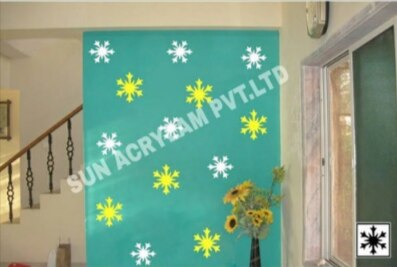 | Painting Stencil Wall Paint Sticker Stencils View product → |
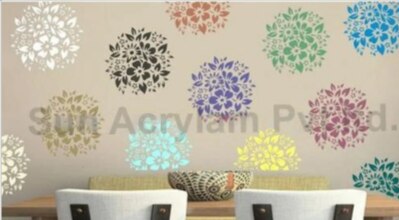 | Painting Stencil Wall Stencil customized View product → |
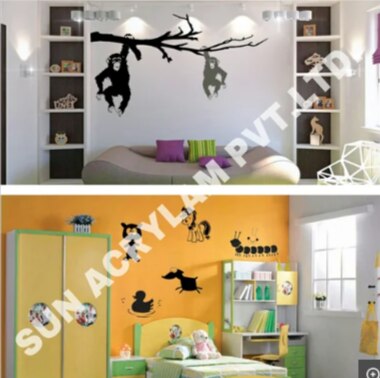 | Painting Stencil Cartoon Wall Decor View product → |
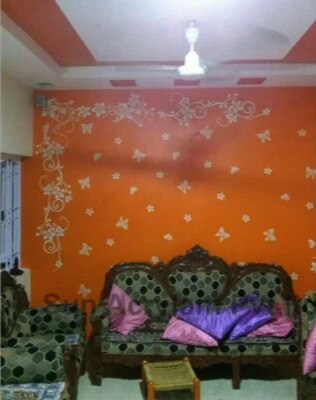 | Painting Stencil Wall Painting Stencil View product → |