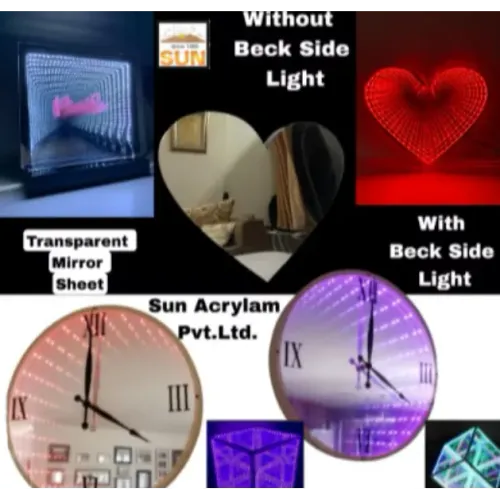


Acrylic mirror sheets can make retail environments, exhibition stands, restaurants, offices, and decorative interiors feel brighter and more spacious. Their low weight and fabrication flexibility allow designers to create reflective forms beyond standard rectangular mirrors.
Selecting the correct product from an Acrylic Mirror Sheet Manufacturer requires careful evaluation of colour, thickness, flatness, mounting, fabrication, and maintenance.
Determine the Role of the Mirror
The first question is whether the surface is intended for accurate personal reflection or primarily for decorative effect.
For dressing areas and applications requiring undistorted reflection, conventional glass may be more appropriate. Acrylic mirror works particularly well for:
- Decorative wall patterns
- Reflective logos
- Product-display backgrounds
- Ceiling elements
- Exhibition structures
- Furniture accents
- Themed installations
- Lightweight mobile fixtures
Defining the role early prevents unrealistic expectations.
Compare Sheet Thickness
Thin sheets are lightweight and easy to process, but they may follow irregularities in the mounting surface. Thicker sheets generally provide greater rigidity, although they still need a flat backing.
The appropriate thickness depends on panel size, support arrangement, cutting design, and location. Large unsupported sheets are more likely to show distortion than smaller bonded elements.
For sizeable installations, a sample panel can reveal whether the selected thickness and backing system are suitable.
Inspect Reflective Quality
Samples should be viewed both closely and from the distance expected in the finished space. Check for:
- Surface scratches
- Inconsistent reflection
- Coating defects
- Colour variation
- Edge damage
- Visible waviness
- Protective-film quality
Lighting conditions affect the result. Retail spotlights may reveal surface issues that are less noticeable in a workshop.
Choose Colours in the Project Environment
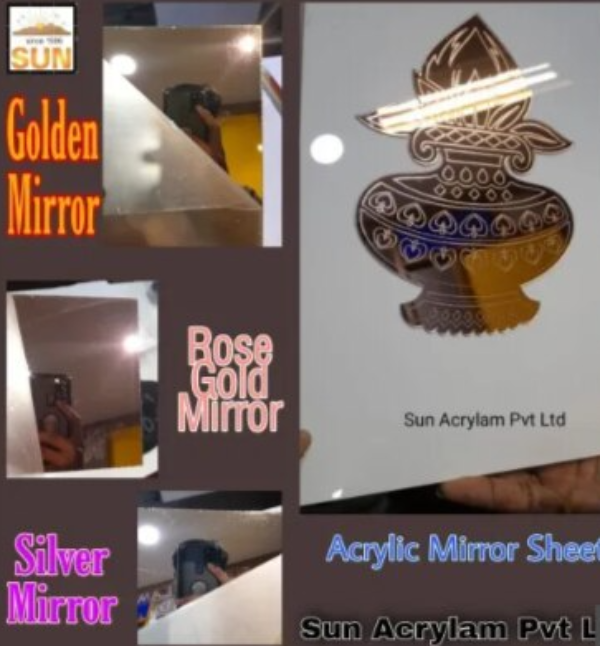
Silver acrylic mirror offers a familiar reflective appearance, while gold, bronze, rose-gold, and other tones create decorative effects.
Rather than selecting from a digital image alone, review physical samples alongside flooring, laminates, lighting, paint, and other finishes. Ahmedabad interiors often receive strong daylight, which can make a reflective colour appear different from its appearance under indoor lighting.
Plan the Cutting Method
Acrylic mirror sheets may be laser cut or CNC routed, depending on the product, backing, thickness, and desired edge quality. Intricate lettering and patterns require careful processing to avoid heat damage, chipped corners, or marks on the reflective layer.
Fabricators should test:
- Fine internal details
- Small mounting holes
- Narrow sections
- Sharp corners
- Engraved areas
- Edge-polishing methods
The protective film should usually remain in place during fabrication and handling.
Prepare a Flat Substrate
Acrylic mirror should be mounted on a stable, smooth, and flat surface. Uneven walls can produce visible distortion.
The installation plan should account for:
- Substrate flatness
- Compatible adhesive
- Expansion allowance
- Panel alignment
- Joint spacing
- Accessibility for replacement
- Temperature conditions
An unsuitable adhesive may damage the backing or create visible patches. Adhesive compatibility should be confirmed with the manufacturer.
Consider Maintenance Before Installation
Highly accessible mirror panels are likely to be touched and cleaned frequently. Acrylic surfaces can scratch if abrasive cloths or harsh cleaners are used.
Provide maintenance teams with clear instructions. Soft microfibre cloths and compatible cleaners are generally preferable. Decorative panels placed behind displays or above normal reach may require less frequent handling.
Calculate Total Project Cost
The sheet price is only one part of the budget. Buyers should consider cutting, edge finishing, backing preparation, adhesive, protective handling, transport, installation, and future replacement.
A design composed of smaller modular elements may be easier to transport and replace than one large panel.
SUN ACRYLAM PVT. LTD. works with acrylic materials and customised fabrication requirements in Ahmedabad, Gujarat. When assessing an Acrylic Mirror Sheet Manufacturer, buyers should request physical samples, discuss the installation system, and validate any complex shape before bulk processing. Thoughtful selection produces a reflective feature that looks intentional rather than improvised.