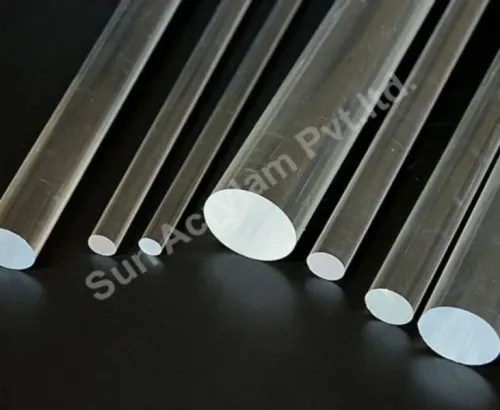


Acrylic rods may look like a straightforward raw material, but supplier selection can affect machining yield, component accuracy, surface finish, and assembly efficiency. OEMs, fabricators, lighting manufacturers, and display companies need rods that behave consistently throughout production.
Evaluating an Acrylic Rod Supplier through measurable criteria helps prevent unexpected problems after a bulk order arrives.
Compare Dimensional Consistency
Diameter variation can influence turning operations, bore alignment, component fitting, and final tolerances. For decorative applications, small variation may be acceptable. Precision-machined components usually require tighter control.
Ask potential suppliers for:
- Standard diameter tolerance
- Length tolerance
- Straightness information
- Batch inspection practices
- Available diameter range
- Custom cutting capability
The most important tolerance should also appear clearly on the purchase order.
Assess Machining Performance
A rod that chips, melts excessively, or develops cracks during machining can slow production and increase rejection. Material performance should be tested using the actual tooling and speeds planned for manufacturing.
A trial may include:
- Cutting the rod to length
- Turning the outer surface
- Drilling or boring
- Threading where required
- Polishing a finished section
- Inspecting for internal stress or cracking
Results should be documented so different supplier samples can be compared objectively.
Review Clarity and Colour
For display and lighting applications, visual consistency may be more important than extremely tight machining tolerance. Examine transparent rods for haze, inclusions, bubbles, distortion, and surface marks.
When ordering coloured material, compare samples under natural light and the project’s intended artificial lighting. Colour should also be checked against other acrylic components in the assembly.
Architects and retail-display manufacturers in Ahmedabad should retain an approved sample for future batches.
Examine Packaging Standards
Good material can become unusable if packaging allows rods to rub, bend, or strike one another during transit. Packaging should suit the rod diameter, length, surface quality, and order quantity.
Important questions include:
- Are individual rods separated?
- Are exposed surfaces protected?
- Is the bundle supported across its length?
- Can the packaging withstand routine loading?
- Is each size or batch identified clearly?
Clear labelling also reduces inventory errors in workshops handling multiple diameters.
Consider Available Secondary Services
Some buyers need raw rods, while others benefit from cut lengths, polished ends, drilled parts, or machined components. Consolidating appropriate secondary processing can reduce internal handling, although the supplier’s capability must be verified.
Request samples of comparable work and define acceptance criteria. A supplier experienced in raw material should not automatically be assumed to provide precision machining.
Compare Minimum Quantities and Lead Times
A supplier suited to large recurring orders may not be ideal for prototypes. Conversely, a small-stock distributor may struggle to maintain batch consistency for a production programme.
Evaluate whether the provider can support:
- Prototype quantities
- Regular production schedules
- Mixed diameters
- Custom colours
- Urgent replacements
- Forecast-based procurement
- Repeat batch consistency
The right commercial arrangement depends on expected consumption and storage capacity.
Verify Technical Communication
Reliable suppliers ask questions when a requirement is incomplete. If chemical exposure, temperature, tolerance, or optical quality could affect material selection, technical clarification is a positive sign.
Fast quotations are useful, but accurate quotations are more valuable. Vague answers about dimensions or material behaviour can become production problems later.
Use a Structured Sample Approval Process
Before approving a supplier, label and test samples under controlled conditions. Record:
- Supplier and batch
- Stated dimensions
- Measured dimensions
- Machining settings
- Surface results
- Fitment outcome
- Lighting appearance
- Approval status
SUN ACRYLAM PVT. LTD. serves buyers requiring acrylic products and fabrication support in Ahmedabad. Procurement managers comparing the company with another Acrylic Rod Supplier should use the same documented criteria for every candidate. This creates a defensible decision based on performance, consistency, and supply readiness rather than price alone.