

Polycarbonate sheets are used where lightweight construction, impact resistance, and practical fabrication are important. Typical applications include machine guards, skylights, roofing systems, partitions, protective covers, industrial enclosures, and architectural glazing.
A Polycarbonate Sheet Supplier should be evaluated according to the intended application rather than through a generic price comparison. Solid, multiwall, textured, and coated sheets offer different performance characteristics.
Solid Polycarbonate for Protective Applications
Solid polycarbonate sheets resemble transparent glazing but provide substantially greater impact resistance than many conventional transparent materials.
They are commonly considered for:
- Machine safety guards
- Equipment covers
- Industrial partitions
- Security glazing
- Protective screens
- Transparent enclosures
- Fabricated components
For machine guards, designers should consider thickness, mounting, access, impact direction, and applicable safety requirements. Material selection alone does not make a guard safe.
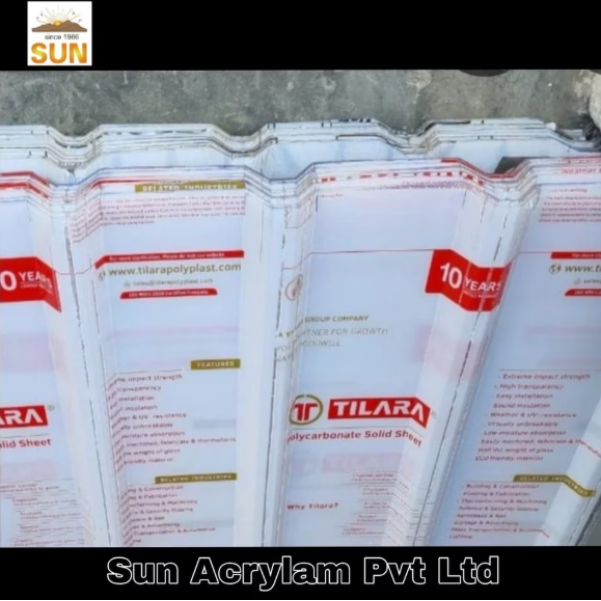
Multiwall Sheets for Roofing
Multiwall polycarbonate contains internal channels that reduce weight and improve thermal insulation. It is often used for canopies, skylights, walkways, terraces, and covered outdoor areas.
The internal structure must be oriented and sealed correctly. Poor installation can allow dust, insects, or moisture to enter the channels.
Roofing design should include:
- Correct slope
- Supporting framework
- Thermal expansion allowance
- Compatible fasteners
- End sealing
- Water drainage
- UV-protected side orientation
Installation quality has a major effect on long-term performance.
UV Protection Matters in Gujarat
Outdoor sheets face intense sunlight and seasonal temperature changes. UV-protected polycarbonate is designed to reduce degradation caused by prolonged exposure.
Buyers should confirm whether protection is applied on one side or both sides. Installers must identify the protected face before removing the printed film.
For projects in Ahmedabad, using an indoor-grade sheet outdoors may lead to premature yellowing or surface deterioration.
Compare Clarity and Light Transmission
Clear sheets allow high light transmission, while tinted, opal, embossed, and textured options manage glare, privacy, and solar heat differently.
An industrial enclosure may need maximum visibility. A roof may benefit from diffused light. A partition may require partial privacy.
Physical samples help architects and procurement teams assess appearance under actual daylight conditions.
Plan for Thermal Expansion
Polycarbonate expands and contracts as temperatures change. Fixing holes, panel gaps, profiles, and fasteners must accommodate this movement.
Over-tightening can restrict movement and create stress. Insufficient edge clearance may cause buckling. These risks are particularly relevant for large outdoor panels.
Fabrication drawings should include the supplier’s recommended expansion allowances.
Check Chemical Compatibility
Polycarbonate may be affected by certain solvents, sealants, lubricants, and cleaning agents. This is especially important in factories and engineering environments.
Before installation, review all substances likely to contact the sheet, including:
- Machine oils
- Cleaning chemicals
- Adhesives
- Sealants
- Paints
- Process fumes
Compatibility should be confirmed rather than assumed.
Compare Polycarbonate With Acrylic
Polycarbonate is generally selected when impact resistance is a priority. Acrylic may provide excellent optical clarity, surface hardness, and polished appearance for display-oriented applications.
The choice should be based on the dominant requirement:
- Impact exposure
- Optical finish
- Scratch resistance
- Outdoor conditions
- Forming needs
- Budget
- Fabrication method
A hybrid project may use both materials in different areas.
Evaluate the Supplier’s Readiness
A dependable supplier should provide clear information on product type, thickness, sheet size, colour, UV protection, masking, and fabrication considerations.
SUN ACRYLAM PVT. LTD. supplies acrylic and polycarbonate materials for customers in Ahmedabad, Gujarat. Buyers comparing any Polycarbonate Sheet Supplier should request application-specific guidance and verify the installation system before placing a volume order. Correct specification and careful installation deliver far better value than choosing solely by the quoted sheet rate.